
IA is strategy. Navigation is mental model architecture. AI can reduce human mediation when applied intentionally.
1. The Organizational Context
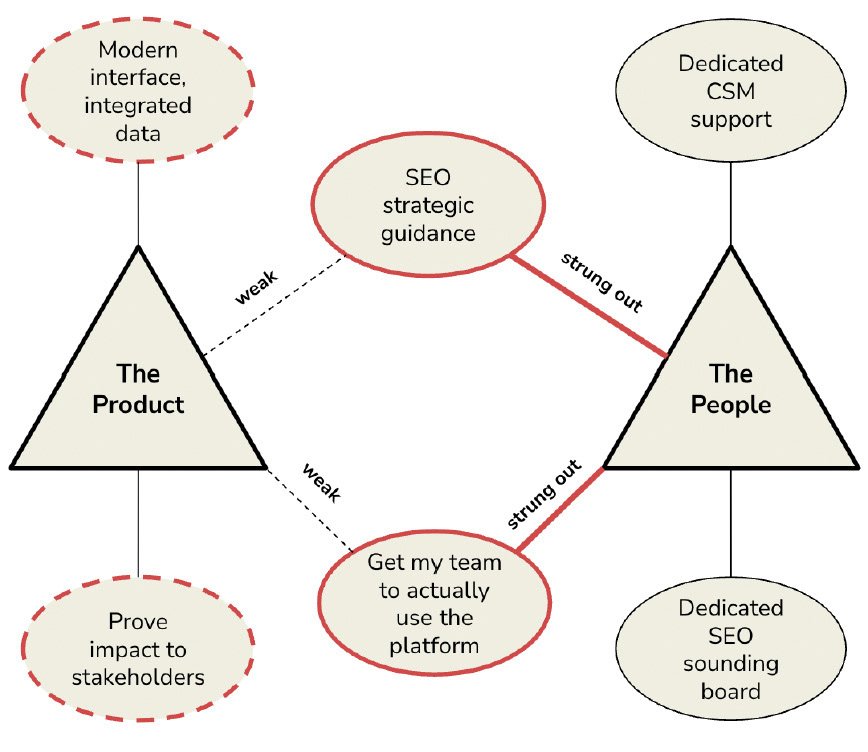
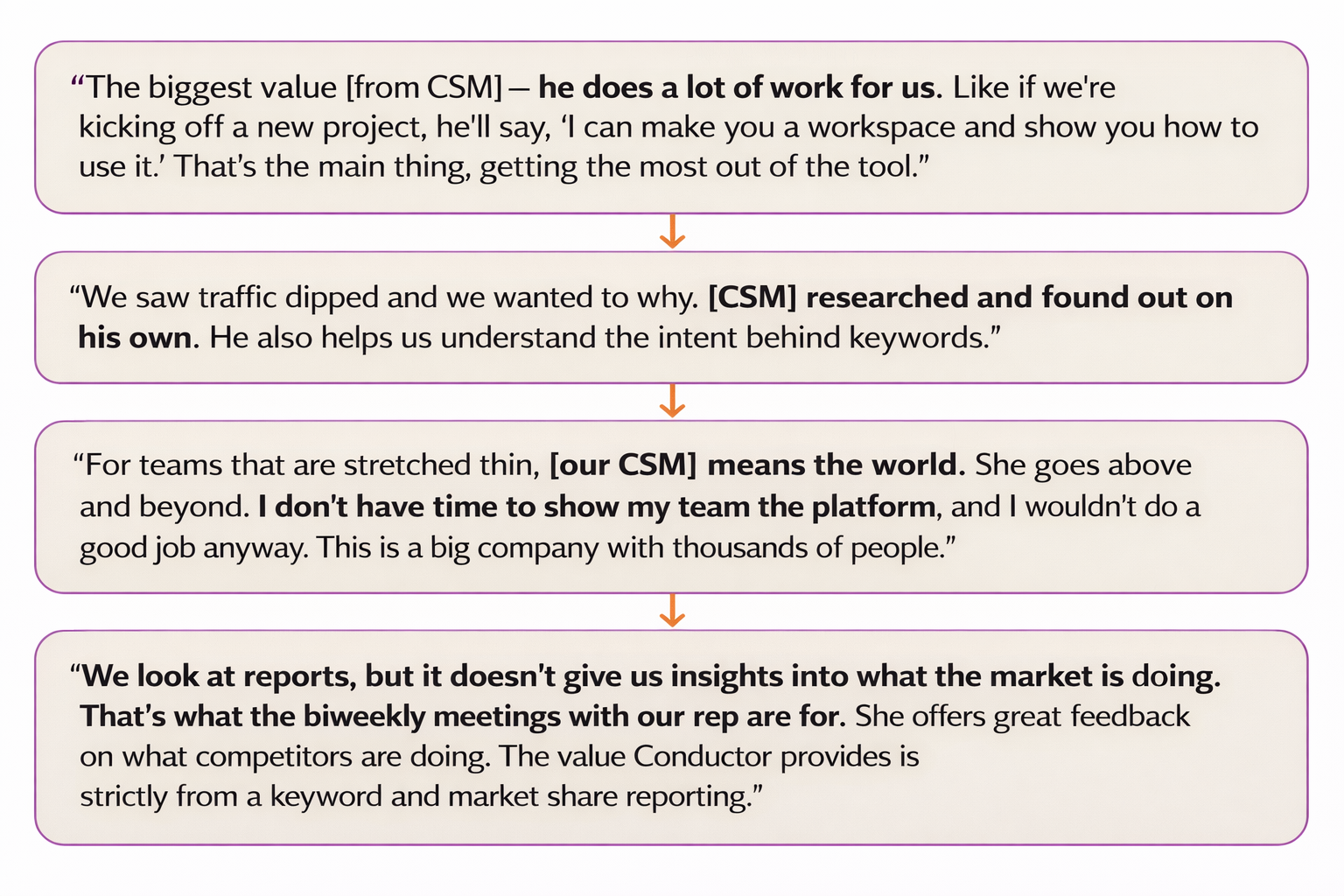
When I joined Conductor, the product wasn't broken — it was drifting. Features had been added consistently, but the underlying system hadn't been designed to absorb that growth. Navigation had accumulated rather than evolved. Workflows reflected how the product was built, not how customers worked. And Customer Success had quietly become the product's de facto UX layer — translating outputs, walking customers through reports, mediating between what the platform produced and what enterprise teams actually needed.
Churn was rising. Not because the platform lacked capability, but because the path from capability to value was too long and too dependent on human effort. My mandate as VP Product Design was clear: introduce structured research, diagnose the system, and design a more scalable path to value.
2. Establishing UX Research
Before touching the product, I needed to understand what was actually happening across the customer lifecycle. I built a research program from scratch and ran 21 in-depth interviews with enterprise customers — across roles, company sizes, and stages of tenure. We paired that with win/loss analysis, usage behavior synthesis, and cross-functional workshops to triangulate what the data and the anecdotes were each missing on their own.
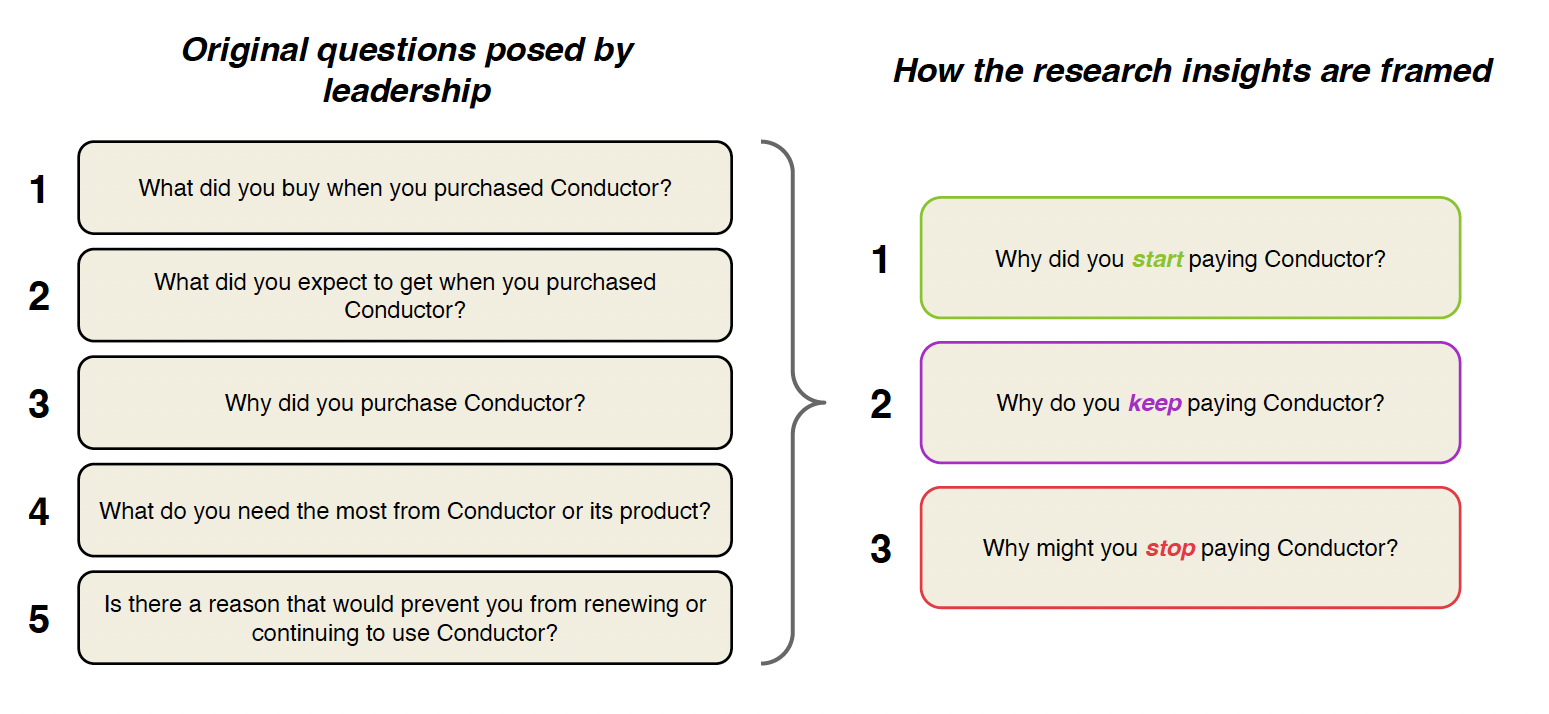
The most important shift the research created wasn't an insight — it was a reframe. The internal conversation had been centered on "why are customers leaving?" That question points backward. Research let us ask a more productive one: how is value actually delivered across the customer lifecycle, and where does that delivery break down?
The answer changed what we were designing for.
3. The Core Insight
The platform was powerful. Customers knew it. But unlocking that power required a level of effort that enterprise teams — already stretched thin — consistently underestimated and eventually stopped attempting.
Reporting required interpretation before it could be communicated. Insights required translation before they could drive action. Navigation didn't reflect how customers thought about their work — it reflected how Conductor had organized its features internally. The cognitive load was high, the payoff was slow, and the gap between what the platform could do and what customers experienced it doing was being filled, quietly and expensively, by CSMs.
The system wasn't failing because of bad design. It was failing because the design assumed too much human effort as a permanent cost of using it. That assumption had to change.
4. Structural Diagnosis: Information Architecture Drift
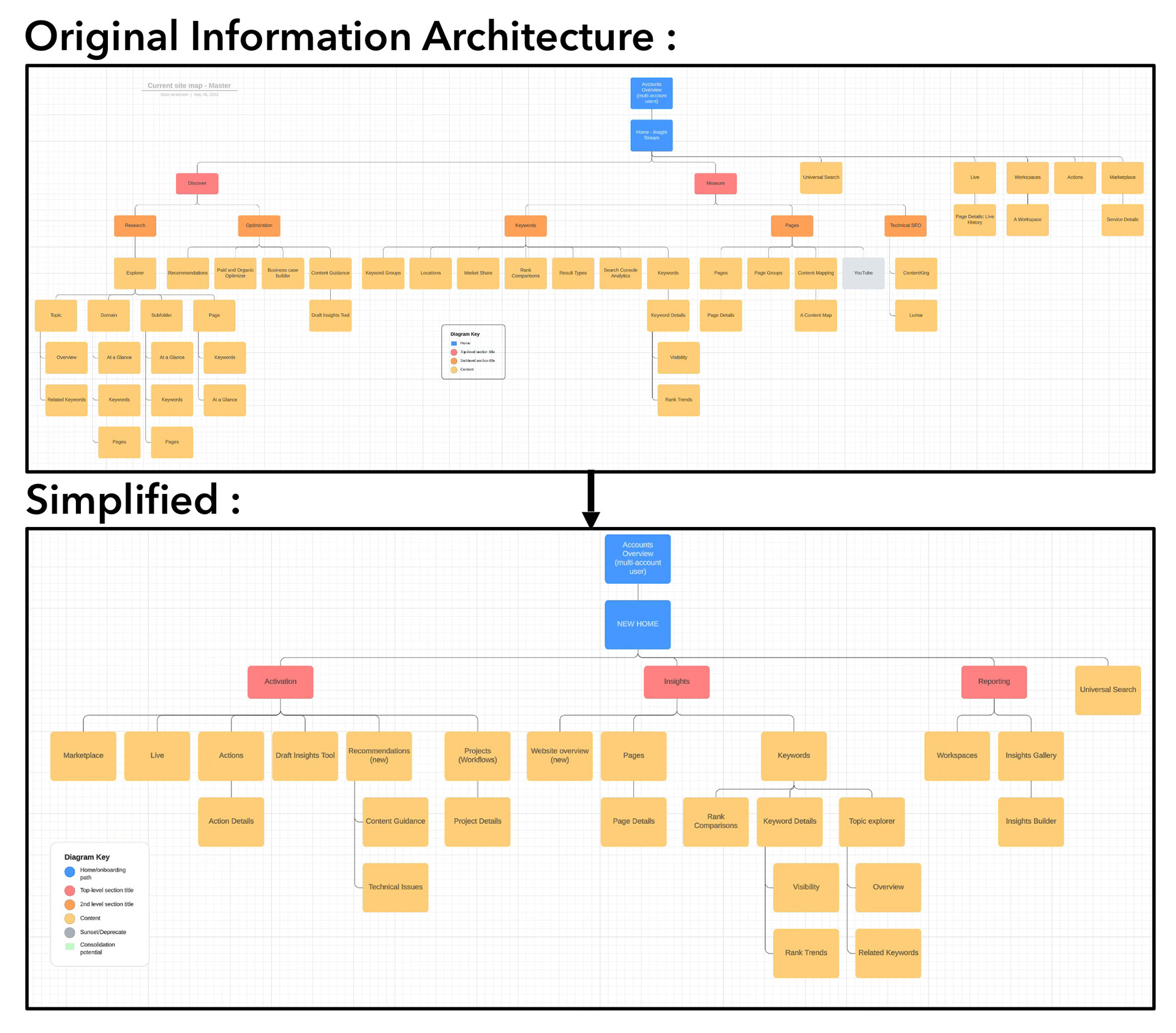
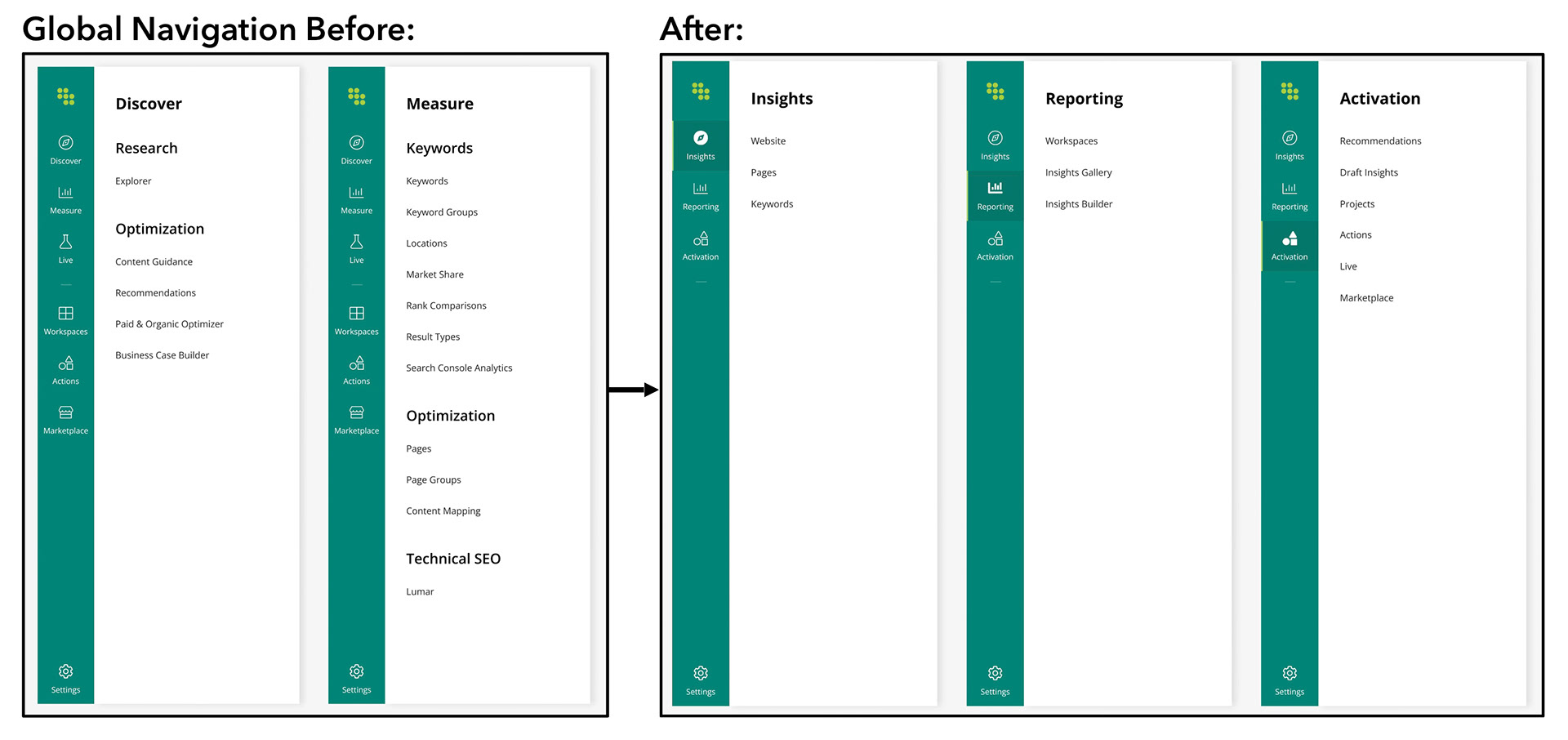
The platform's information architecture had grown by addition, not by intention. Every new feature had found a home somewhere in the existing structure — the Discover/Measure split had made sense once, then stopped making sense as the product expanded around it. Pathways overlapped. Concepts duplicated. The hierarchy reflected Conductor's internal organizational logic, not the mental model of the people using it.
The structural diagnosis was clear: the IA needed to be rebuilt around three coherent pillars — Insights, Reporting, and Activation — that matched the actual jobs customers were trying to do. Understand what's happening. Communicate it to stakeholders. Act on it. That's the job. The architecture needed to say so.
This wasn't a navigation refresh. It was a platform restructuring that required alignment across Product, Engineering, and CS before a single pixel changed.
5. Navigation as Mental Model Architecture
Navigation isn't a UI pattern — it's a statement about how you believe your users think. The old navigation told customers what tools existed. The redesigned navigation told customers what they could accomplish.
Moving from feature taxonomy to outcome taxonomy meant that a new user landing in the platform for the first time could orient immediately. An experienced user could develop reliable habits. And an enterprise team sharing the platform across roles could each find a clear entry point relevant to their job — without a CSM to show them the way.
The three-pillar model — Insights, Reporting, Activation — wasn't just a navigation change. It was a declaration of what the platform was for.
6. Product Responses Influenced by Research
AI as Interpretation Layer
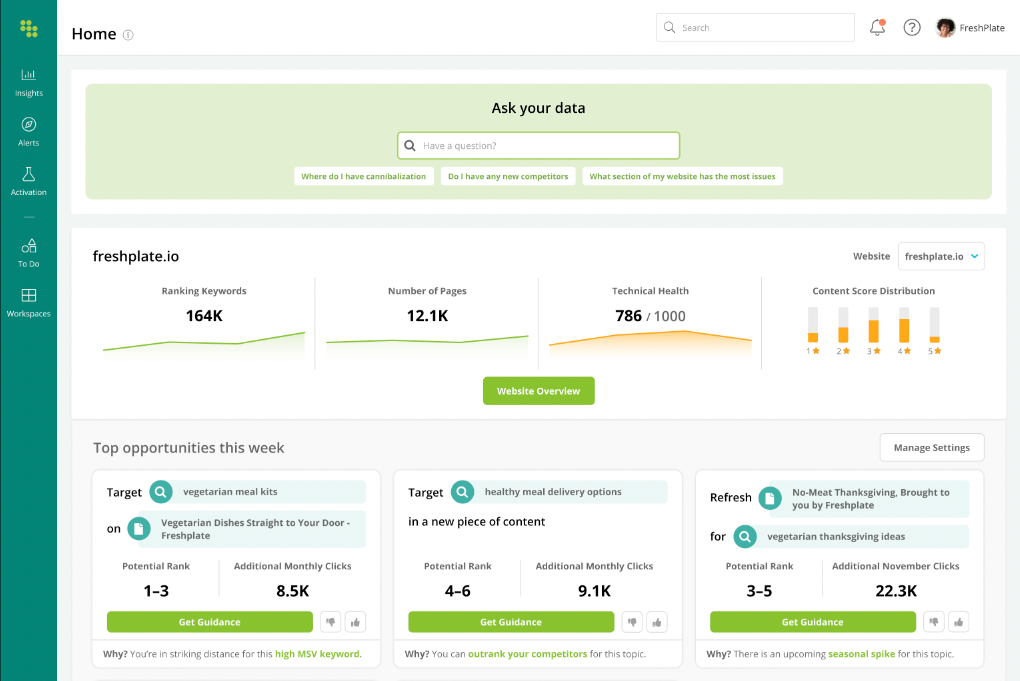
Customers weren't asking for more data. They were asking for answers. Research consistently surfaced the same pattern: users would arrive at a chart or report, understand what it said, and then spend significant time figuring out what it meant and how to communicate it. AI entered the product not as a feature, but as a friction reducer — a scalable substitute for the interpretation work that had previously required either deep expertise or a CSM on the phone.
Customizable, Executive-Ready Reporting
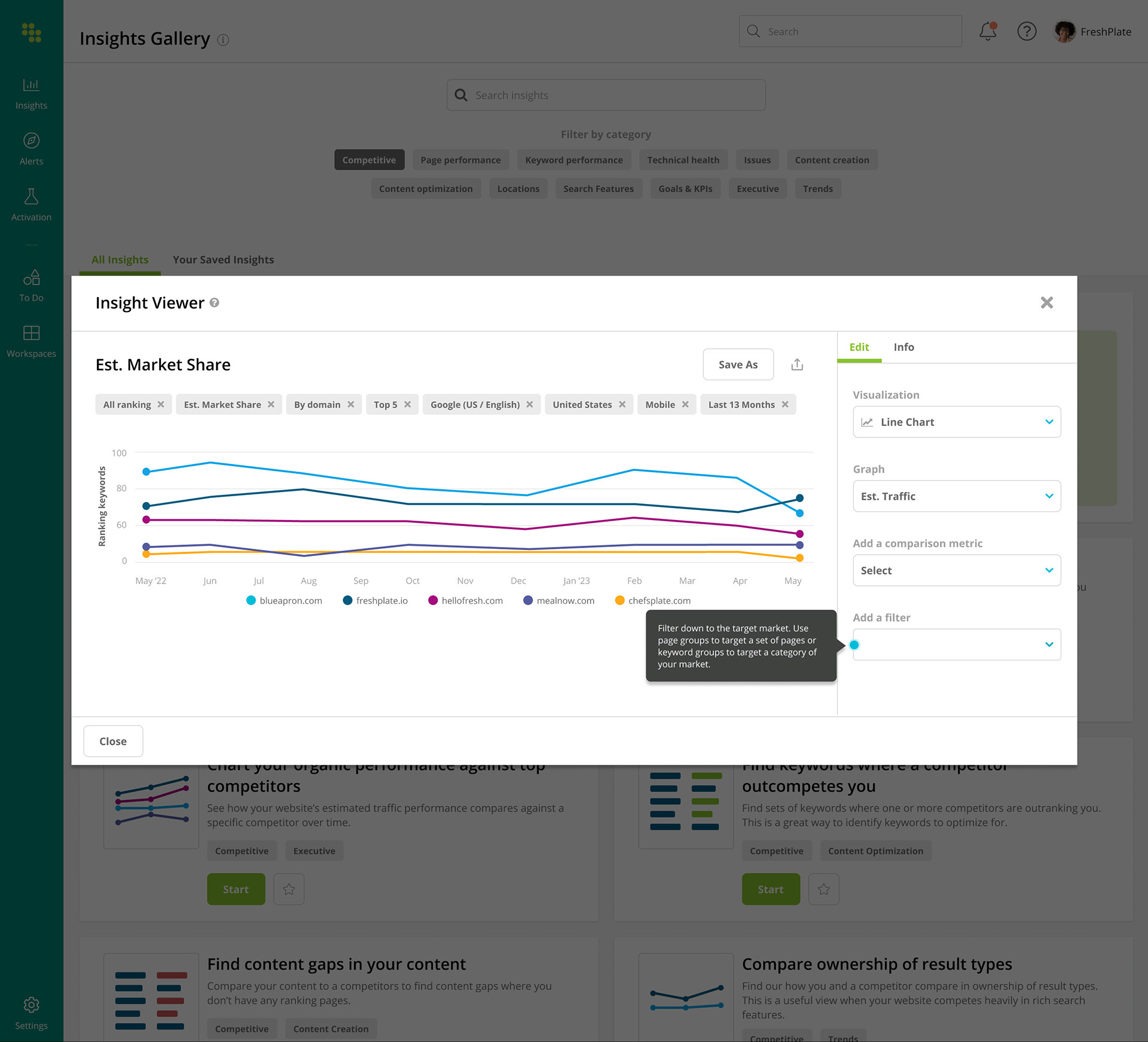
One of the most common CSM escalations was report crafting. Enterprise customers needed polished, executive-ready outputs but lacked the time or platform fluency to produce them independently. We made insight storytelling self-serve — flexible metric comparison, clear visualization controls, and configuration designed for people who needed to communicate results, not analyze raw data.
Structured Insight Workflows
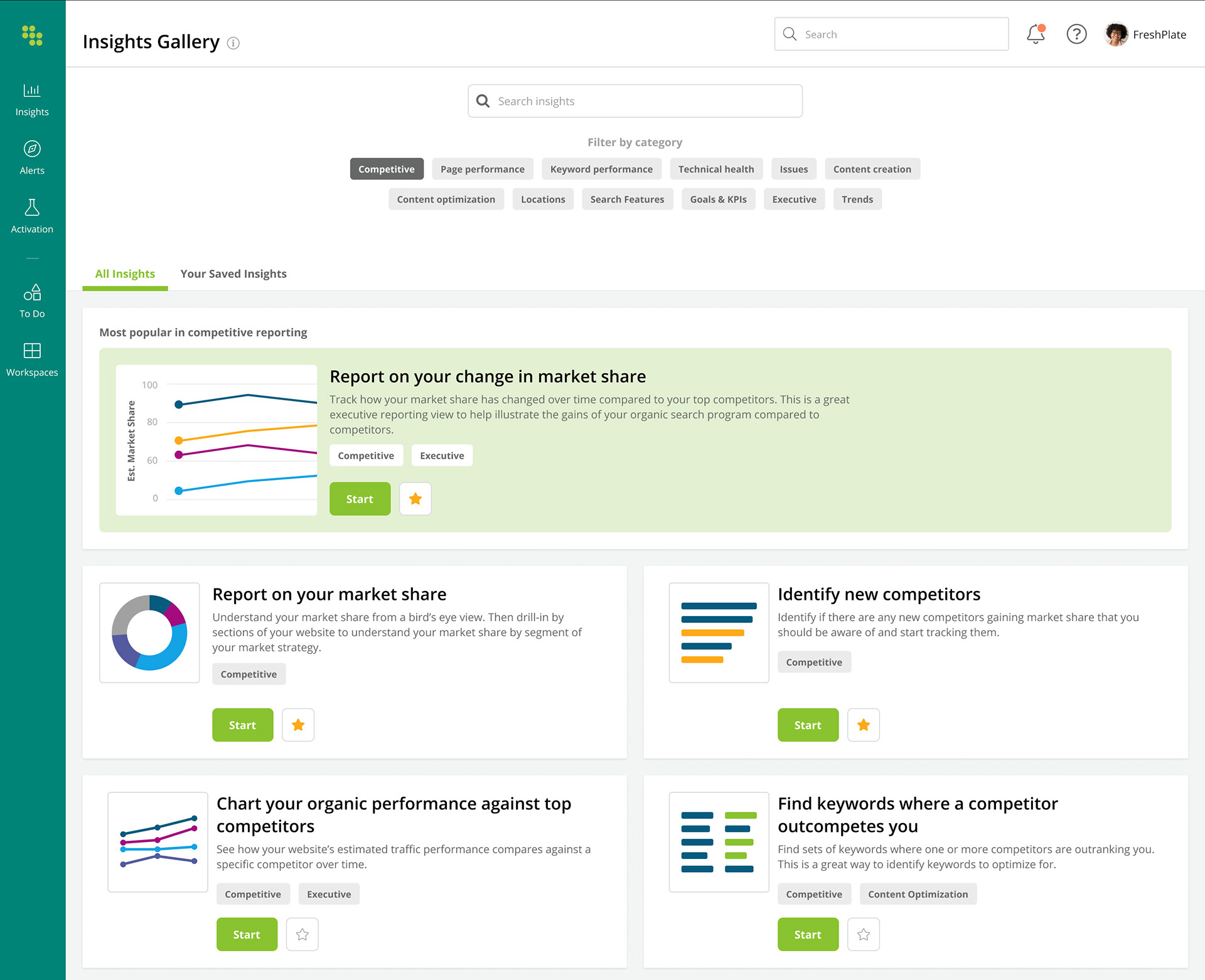
Raw capability without structure produces paralysis. We shifted from exposing data surfaces to designing guided intelligence flows — structuring market share reporting, competitive tracking, and content gap discovery as workflows with clear entry points, logical progressions, and actionable endpoints. The platform stopped presenting possibilities and started delivering conclusions.
7. Platform Coherence
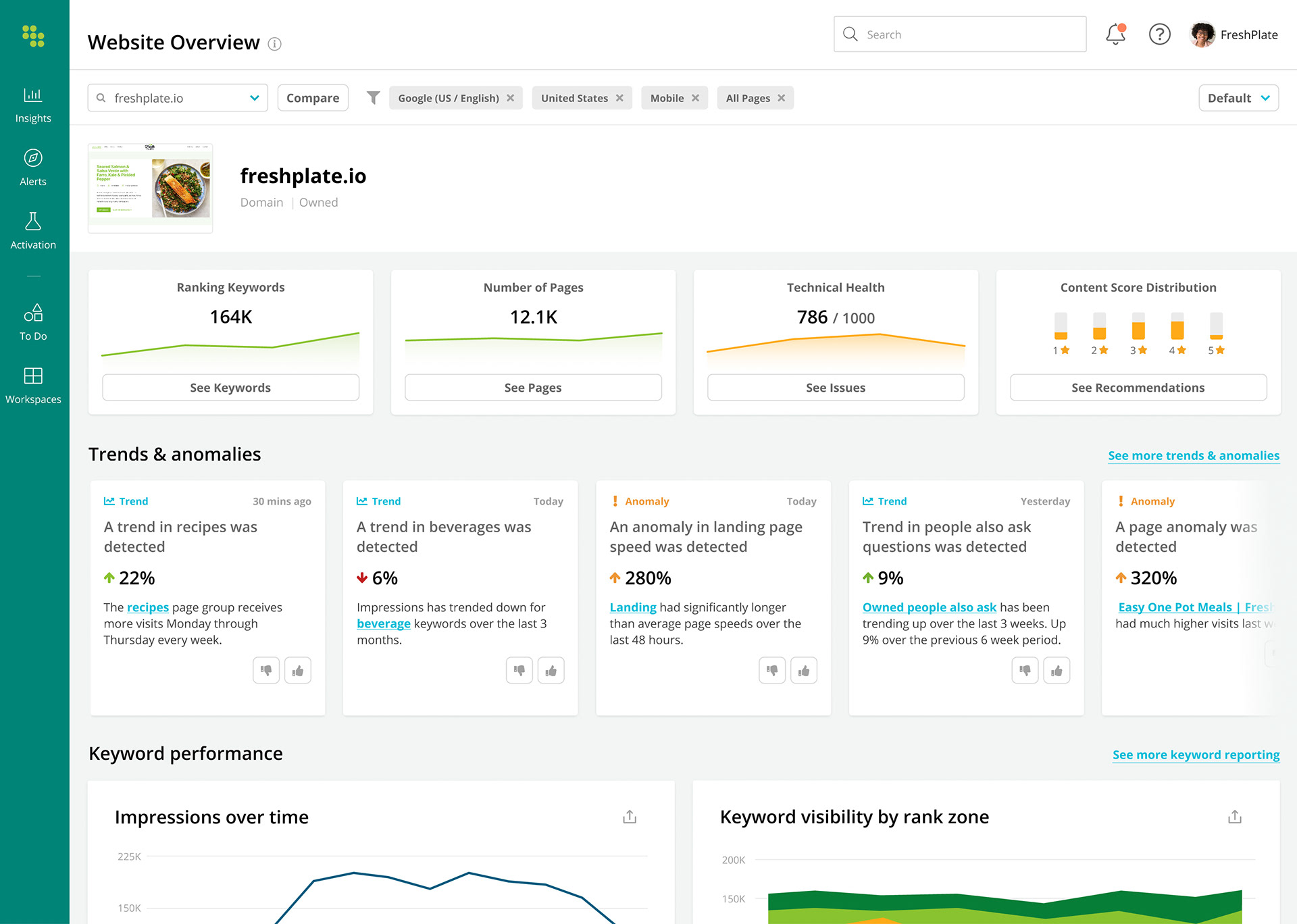
The measure of this work wasn't any individual feature — it was whether the platform felt like a system that had been designed, rather than assembled. Post-restructure, navigation had a logic customers could learn once and rely on everywhere. Workflows had clear endpoints. AI surfaced meaning without requiring expertise to access it. The burden of interpretation — which had been defaulting to CSMs and power users — was absorbed by the product itself.
The UI reflects structural clarity. When the structure is right, the interface almost designs itself.
8. Organizational Impact
At the VP level, the most durable impact is rarely the work itself — it's the organizational shift that makes the work possible to sustain. At Conductor, that meant establishing UX Research as a standing discipline rather than a project-by-project luxury, and changing the conversation Product and Engineering were having about what "good" looked like.
Roadmap decisions began referencing customer lifecycle stages. Design reviews engaged with mental models, not just screens. The relationship between UX and CS shifted from reactive ("can you help explain this to the customer?") to proactive ("here's what we learned that should change the product"). That's the organizational outcome that outlasts any individual redesign.
Leadership POV
There's a version of this story where the problem was navigation, and the solution was a cleaner nav. That story is technically accurate and completely misses the point.
The real problem was systemic: a platform whose value was locked behind human mediation at every turn. CSMs translating reports. Analysts interpreting dashboards before they could act on them. New users unable to orient without a guided walkthrough. Good UX can reduce friction at the surface. It can't fix a system that requires friction to function.
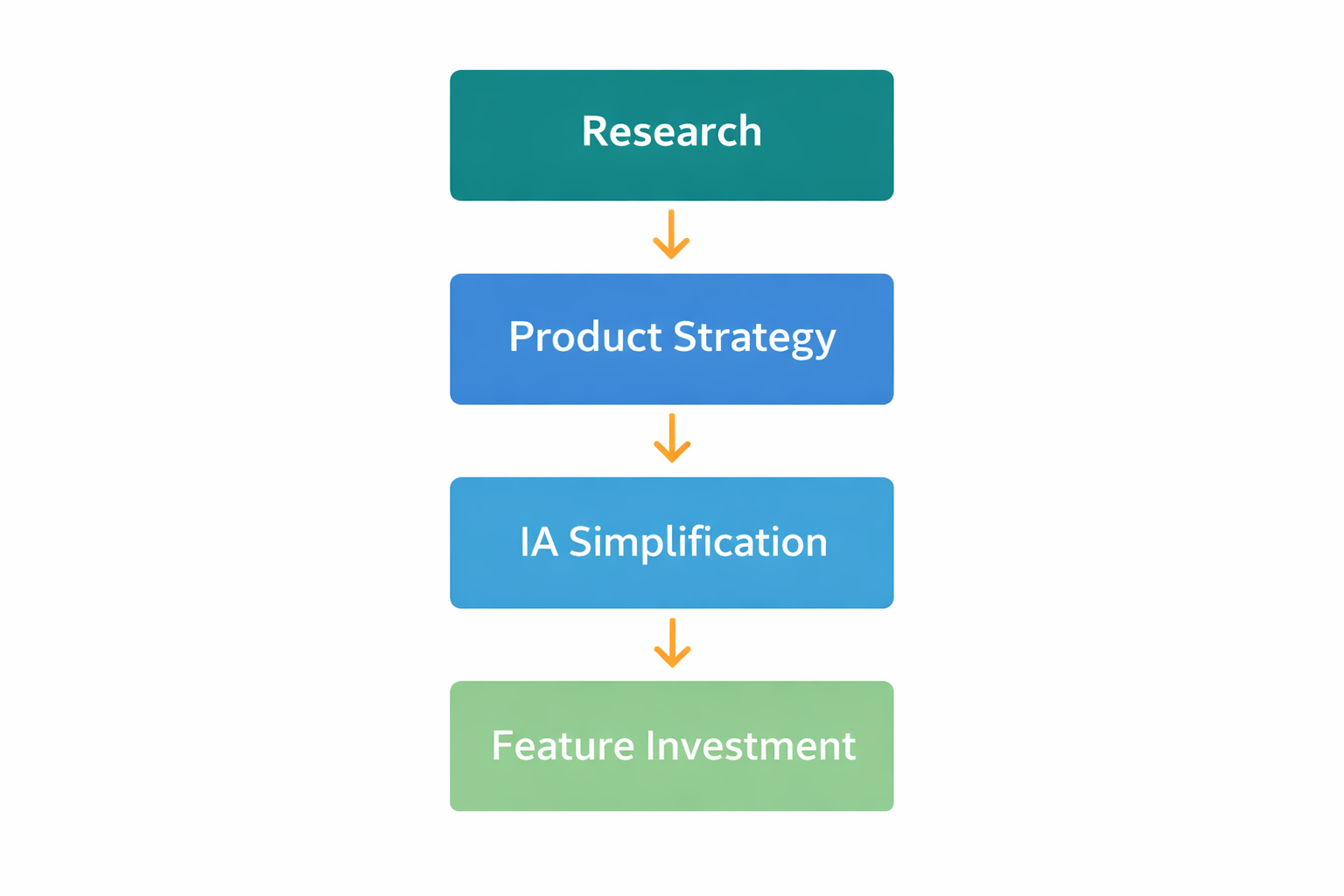
What this work required — and what I believe separates design leadership from design execution — was the willingness to diagnose the system before proposing solutions to its symptoms. Research, IA, navigation, AI, reporting: none of these were individual initiatives. They were expressions of a single strategic reframe: value delivery is a design problem, and design has to own it all the way to the outcome.